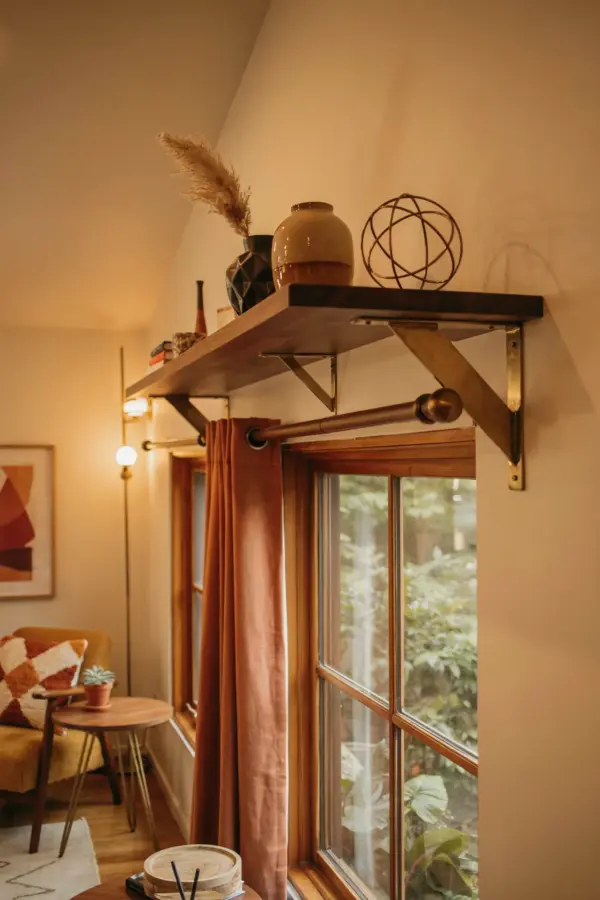
When I first started looking for a rustic curtain rod holder for my farmhouse living room, I quickly realized that not all brackets are created equal. The one I eventually settled on is a sturdy wall mounted adjustable bracket that combines natural wood warmth with real holding power. This specific design supports heavy curtains without sagging, and the adjustable arm lets me fine tune the distance from the wall. Whether you are dressing a wide picture window or a narrow sidelight, this rustic curtain rod holder brings the texture and reliability you need for a quick, satisfying window upgrade.
Why an Adjustable Bracket Makes All the Difference for Heavy Curtains
An adjustable curtain bracket is not just a nice feature, it is a practical necessity when you are working with lined drapes or thick linen panels. Fixed brackets force you to guess the exact projection, but an adjustable design lets you extend or retract the rod by an inch or two. That small range makes a big difference when your window trim is uneven or when you want the curtains to clear a radiator or sill.
For my own farmhouse living room, I needed the bracket to hold a substantial wooden rod and floor length curtains made of heavy cotton. The adjustable arm, made from solid steel with a black finish, gave me the confidence that the bracket would not bend over time. Many standard brackets claim to support heavy curtains, but the combination of a thick wood backplate and a reinforced adjustable joint actually delivers. Look for a bracket that lists a weight capacity of at least 15 pounds per bracket, and you will never worry about sagging.
- Check the maximum projection range (usually 3 to 6 inches).
- Ensure the bracket has a metal core inside the wood arm for extra strength.
- Match the width of the backplate to your curtain rod diameter for a flush fit.
- Prefer brackets with pre drilled pilot holes to simplify installation.
Choosing the Right Wood Tone for Your Farmhouse Living Room
A farmhouse living room thrives on natural textures, and the wood finish of your wall mounted bracket should complement your existing furniture and flooring. Light oak or whitewashed pine works beautifully if your room has pale walls and airy linen curtains. Dark walnut or reclaimed barn wood adds weight and contrast against white shiplap or soft gray walls. I chose a medium brown with visible grain because it sits between my birch coffee table and my dark stained floor.
Do not be afraid to mix wood tones as long as they share an undertone. Warm browns and golden oaks pair well, while very cool grays can clash with red toned mahogany. The bracket itself is a small detail, but its wood surface catches the light and becomes a focal point. If your curtains are solid and neutral, the bracket becomes the quiet accent that ties the whole window together. Remember to also consider the finish on your curtain rod, whether it is black iron, brushed nickel, or a matching wood.
How to Mount Your Rustic Curtain Rod Holder Securely
A wall mounted bracket is only as good as its installation. Even the most beautiful wood bracket will fail if it is not anchored properly, especially when holding heavy drapes. Start by locating the wall studs behind your drywall. Most curtain rods need brackets placed at each end and possibly one in the middle for long spans. Using a stud finder saves you from relying on drywall anchors that can pull out over time.
If you cannot hit a stud at your desired bracket position, use heavy duty toggle bolts or molly bolts rated for at least 50 pounds. The bracket I installed came with screws that were too short for my thick plaster wall, so I swapped them for longer cabinet screws. Make sure the bracket sits level before tightening fully. A small bubble level placed on the arm helps confirm everything is straight. Once mounted, give the bracket a firm tug to test its hold before hanging the rod and curtains.
For a farmhouse living room with tall windows, consider mounting the bracket just below the ceiling to make the room feel larger. That placement also lets the curtains hang without breaking the visual line. Remember to account for the finial clearance on each side so the curtain can slide freely past the bracket without bunching.
Styling Ideas to Make Your Living Room Decor Shine
The right living room decor is about layering, and the bracket is your starting point. Pair a dark wood rustic curtain rod holder with linen curtains in a soft cream or taupe for a relaxed, airy feel. If you want more drama, go with blackout curtains in charcoal or deep navy and let the natural wood bracket break up the darkness. I like to hang my curtains so they just kiss the floor, a length that feels intentional without dragging.
You can also use the bracket as a place to add small decor touches. A thin macrame hanging above the bracket or a small garland of dried eucalyptus draped over the arm adds character without cluttering the window. Since the bracket itself is a design element, keep the rod simple and straight, avoid overly ornate finials that compete. A wooden ball end or a simple wrought iron ring works best. If you have multiple windows in the same room, use identical brackets and rods to create a cohesive look across the wall.
Best Spacing and Placement for a Balanced Window
#RusticCurtainRodHolder #WallMountedBracket #FarmhouseLivingRoom #AdjustableCurtainBracket #LivingRoomDecor
Leave a Comment