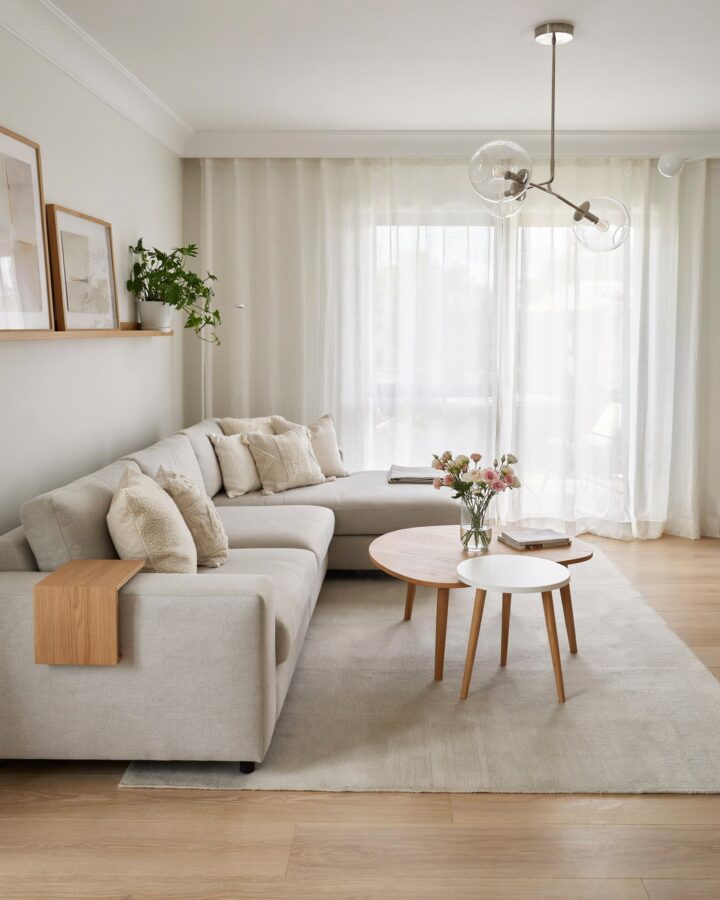
If you have a rectangular living room layout, you have probably noticed how easy it is for the space to feel like a bowling alley. One long wall facing another long wall, furniture pushed against the sides, and a narrow runway in the middle. That is the dreaded tube effect. I have seen it happen in so many homes, and the fix is not about buying expensive new furniture. It is about avoiding a few common mistakes that turn a long room into a tunnel. Here is how to break up that rectangle without losing flow or function.
Mistake One: Pushing All Furniture Against the Walls
Many people think that shoving sofas and chairs against the long walls will open up the center. It does the opposite. It leaves a barren strip down the middle, making the room feel twice as long and half as wide. Instead, pull your main seating away from the walls. Float a sofa perpendicular to the long wall, or angle it to create a conversation zone. This instantly shortens the visual length and adds depth.
Try placing a loveseat or two armchairs with their backs to the center of the room. Even a few inches off the wall helps. You want to break the long sightline, not reinforce it. A simple rule: do not let any furniture touch more than one long wall if possible.
Mistake Two: Ignoring Zone Planning for Separate Functions
A rectangular space begs for room zoning. Without it, you get one giant, undefined rectangle that feels both cramped and empty. The fix is to carve out distinct areas for different activities. For example, create a TV viewing zone at one end, a conversation cluster in the middle, and a reading nook near the window. Use area rugs to anchor each zone. A large rug under the sofa defines the social area, while a smaller one under a chair and lamp marks the reading spot.
Be specific with your zones. If you work from home, add a desk behind the sofa. If you entertain often, make the dining table a separate zone with its own rug. The key (sorry, have to say it once) is to use the room’s length as an asset, not a liability. You get multiple rooms in one.
Mistake Three: Choosing the Wrong Rug Size
Tiny rugs are the biggest culprit in a narrow room. A small rug floating in the middle makes the floor look like a postage stamp, emphasizing the empty space around it. Instead, go big. A rug that extends under the front legs of your sofa and chairs pulls the furniture together and visually widens the room. For a rectangular living room, a rug that is at least 8×10 feet (or larger) can anchor the main seating area and break the tunnel effect.
- Measure first: The rug should be wider than the sofa, not narrower.
- Layer if needed: A large sisal or jute rug with a smaller patterned rug on top adds texture and dimension.
- Avoid runners in the middle: Runners belong in hallways, not in the center of a living room. They make the space look like a corridor.
Mistake Four: Skipping Vertical and Horizontal Visual Breaks
When a room is long and narrow, your eyes follow the length. To stop that, you need breaks at eye level. A tall bookshelf on the short wall, a large piece of art above the sofa, or a bold accent color on the end wall can act as a visual stop sign. Do not line all the art along the long walls. Instead, place a striking piece on the far wall to draw the eye sideways, which makes the room feel wider.
Another trick: use a room divider or a tall plant to break the sightline. A fiddle leaf fig tree in a large pot placed at the midpoint of the long wall creates a natural pause. For a softer look, hang a curtain rod to define a transition between zones. Even a console table with a lamp can do the job.
Mistake Five: Poor Lighting That Emphasizes the Tunnel
Overhead lighting in the center of a long room casts harsh shadows and makes the space feel like a subway tunnel. Avoid a single ceiling fixture. Instead, layer your lighting. Use floor lamps at both ends to create pools of light, and add table lamps on side tables to soften the edges. If you have a long wall, install picture lights or wall sconces to break up the blank expanse.
I have found that placing a floor lamp in the corner of a reading zone and another near the TV area creates distinct islands of light. This reinforces your zone planning and makes the room feel cozy, not cavernous. Dimmable lights are a game changer because you can adjust the mood depending on the time of day.
Mistake Six: Forgetting to Balance Visual Weight
A rectangular living room can feel lopsided if all the heavy furniture is on one side. If your sofa is against the long wall, balance it with a substantial piece on the opposite side. A pair of armchairs, a large plant, or a console table with a mirror above can do the trick. You want the eye to travel evenly, not slide down one side.
Also consider color. Painting the far end wall a slightly darker shade than the rest of the room can shorten the apparent length. It brings that wall forward visually. Use the same trick on the shorter walls to make them feel wider. It is a small paint change with a big impact.
Rectangular rooms get a bad reputation, but they actually give you more flexibility than square ones once you know the common traps. Avoid pushing everything against the walls, use rugs and lighting to define zones, and always interrupt the long sightlines with furniture, plants, or color. Next time you rearrange, try floating one piece of furniture away from the wall. You might be surprised at how much better the room feels. Save these ideas for your
#rectangularlivingroom #livingroomlayout #narrowroomideas #interiordesigntips #roomzoning
Leave a Comment