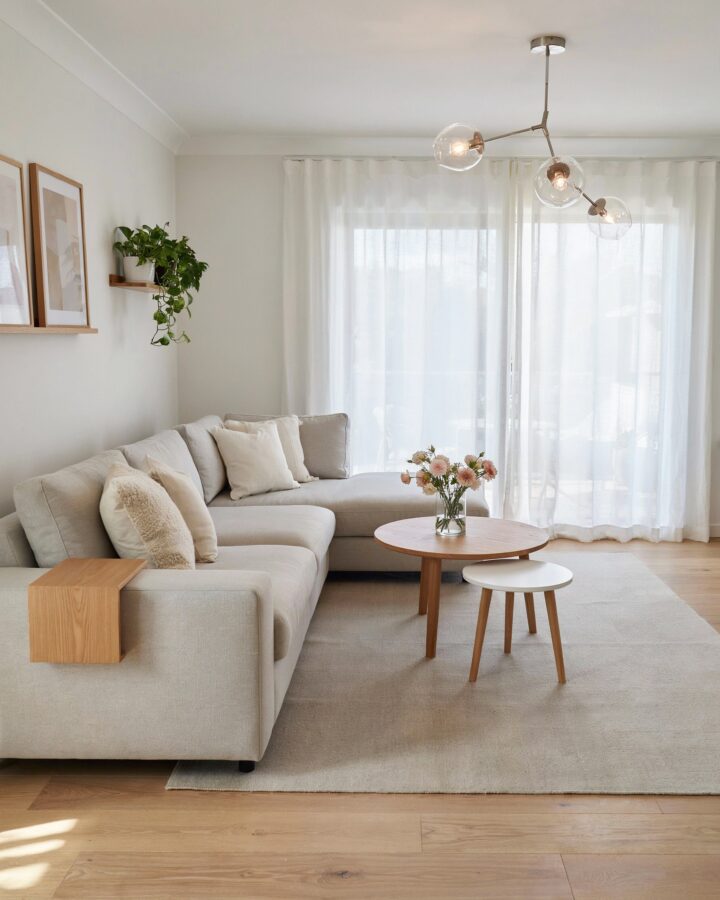
Avoid the Tunnel Effect in Your Rectangular Living Room
If your living room feels more like a bowling alley than a cozy hangout, you are dealing with the classic rectangular living room layout problem. That long, narrow shape creates a tunnel effect, pushing everything into a straight line and making the space feel cramped. But with a little clever furniture arrangement, you can break up those long lines and turn your narrow room into a warm, functional gathering spot. I have gathered a few theme-based ideas to help you rethink your floor plan without any major renovation.
Define Separate Zones with Area Rugs
One of the quickest ways to stop the tunnel effect is to use area rugs to carve out distinct zones. In a rectangular living room layout, you have room to create two or even three separate areas: a conversation corner, a reading nook, or a media zone. Each rug anchors its own zone and visually cuts the length of the room.
For example, place a large rug under your sofa and coffee table to mark the main seating area. Then add a smaller rug near the window with an armchair and a floor lamp to define a second zone. Keep the rugs different but complementary in pattern or texture so each area feels intentional. This trick works especially well in a narrow room where you want to avoid the furniture lining up like a train.
Place Seating Perpendicular to Walls to Change the Flow
Most people instinctively push all furniture against the walls in a long, narrow space. That only makes the tunnel effect worse by leaving a clear, empty runway down the middle. Instead, pull seating away from the walls and arrange it perpendicular to the longest walls. This breaks the straight line and creates a more intimate layout.
Try floating a sofa with its back to the center of the room and placing two chairs opposite it, forming a square or rectangle. This arrangement shortens the visual length of the rectangular living room layout and encourages conversation rather than a one-way view. You can leave a small gap behind the sofa for a console table or a row of plants, which adds depth without cluttering the path.
Add Vertical Storage to Break Up Long Lines
When your room is long and narrow, the eye tends to race along the walls from one end to the other. Vertical storage pieces interrupt that horizontal flow and draw the gaze upward. Tall bookshelves, a floor-to-ceiling cabinet, or a ladder shelf placed against one wall act like visual stops.
For a practical approach, consider these vertical storage ideas:
- A tall bookcase with open shelving at one end of the room to add height and color.
- A slim console table with a large framed mirror above it to reflect light and break the wall length.
- Floor-to-ceiling curtains even if the window is smaller, to create a vertical line that tricks the eye.
- Hanging wall art or a gallery wall arranged in a vertical column rather than a horizontal row.
These elements shift the focus from the length to the height of the rectangular living room layout, making the space feel more balanced.
Layer Lighting to Shorten the Room Visually
Lighting plays a huge role in how we perceive space. A single overhead light in the center of a long narrow room will cast shadows that emphasize the tunnel effect. Instead, layer different light sources at various points along the room to create pockets of brightness and shadow.
Place a floor lamp near the midpoint of the longer wall, a table lamp on a sideboard at one end, and a pendant light over the main seating area. The goal is to illuminate each zone separately so the eyes stop at each pool of light instead of traveling the entire length. In a rectangular living room layout, task lighting on a shelf or reading lamp near an armchair also helps define that spot as a destination, not just part of a corridor.
Use Color and Pattern to Confuse the Eye
Color is a powerful tool for narrowing room ideas. Painting the shorter end walls a darker accent shade can make them feel closer, visually shortening the room. On the other hand, keep the long walls light or neutral to avoid making them feel even longer. A bold pattern on the rug or one accent wall near the middle of the long side can also distract from the shape.
Try adding a large-scale geometric pattern on the wall that sits opposite the main seating area, or use a striped rug that runs perpendicular to the longest wall. Those horizontal lines across the narrow width trick the eye into seeing more width and less length. Just be careful with vertical stripes on curtains; they can exaggerate height but might not help the width problem unless placed strategically.
Choose Furniture Scale and Spacing Carefully
In a narrow space, oversized furniture can make the room feel clogged, while undersized pieces get lost and emphasize the length. For a successful furniture arrangement, think about the proportions. A long, low sofa might visually stretch the room, but a shorter, deeper sofa paired with a couple of chairs creates a more grounded look.
Leave
#rectangularlivingroom #furniturearrangement #tunneleffect #narrowroomideas #livingroomlayout
Leave a Comment