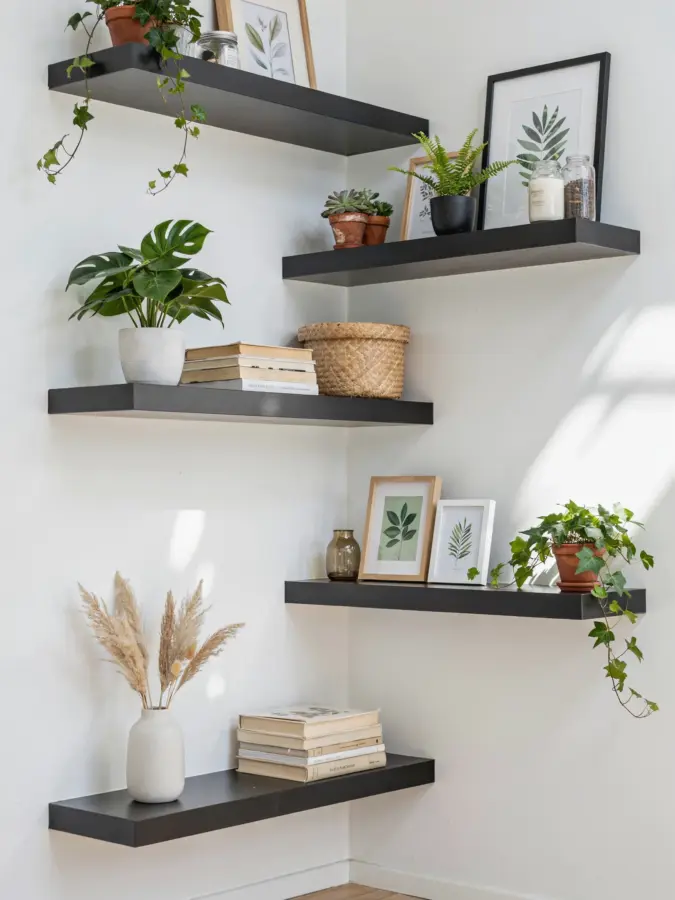
If you have bare walls that feel a bit lifeless, floating shelves are one of the quickest ways to add character without committing to heavy furniture. I have installed them in three different rooms in my own apartment, and every time they change the whole energy of the space. Floating shelves give you display space without taking up floor area, and they work with almost any decorating style. The trick is knowing how to arrange them so they look intentional, not messy. Here are some curated ideas based on different living room themes.
Minimalist shelf styling with neutral tones
If you lean towards clean lines and calm spaces, keep your shelves simple. Stick to a palette of white, beige, soft gray, and natural wood. I like to place a single large ceramic vase on one shelf and stack three or four coffee table books on the shelf below. The key is leaving negative space. Do not fill every inch of the shelf. Leave gaps so the items breathe.
For a minimalist look, use items that serve a purpose. A sleek lamp, a small plant with a matte pot, or a framed black-and-white photo all work well. Avoid anything with busy patterns or bright logos. The goal is to let the shelf itself almost disappear into the wall. This approach is also one of the easiest storage solutions because you do not have to dust around a thousand trinkets.
Layered textured shelves for warmth
Not everyone wants a stark minimalist look. If your living room feels cold or too modern, layering different textures can soften it. Mix a chunky knit throw draped over one shelf end with a smooth marble bookend and a small woven basket. The contrast between soft fabric, hard stone, and natural fibers makes the eye move around.
I love using dried eucalyptus or pampas grass in a textured clay pot. It adds height without being heavy. Try stacking a wooden cutting board vertically behind a small stack of magazines. That unexpected layering gives depth. You can also lean a small framed mirror against the wall on one shelf to reflect light and make the room feel bigger.
Vertical asymmetry for modern living rooms
One common mistake is placing everything in a straight line. That looks like a store display, not a home. Instead, vary the heights and positions of objects on each shelf. Put a tall plant on the far left of the top shelf, a medium-sized book stack on the right of the middle shelf, and a low ceramic bowl on the center of the bottom shelf. The imbalance creates visual interest.
I have found that odd numbers work better than even numbers. Three items per shelf, or five across the whole unit, feels more natural. You can also stagger items so they overlap slightly from one shelf to the next. For example, let a trailing plant vine hang down and brush the top of a book on the shelf below. That simple touch ties the whole arrangement together.
Living room decor with personal artifacts
Floating shelves are perfect for showing off items that tell your story. Travel souvenirs, handmade pottery, or family photos in simple frames make the space feel like yours. I keep a small collection of vintage cameras on one shelf and a stack of postcards from different cities on another. These pieces spark conversation when guests come over.
When using personal items, try to group them by color or material. If everything is a different shade, the shelf can look chaotic. Put all the blue-toned items together and the warm wood pieces elsewhere. You can mix personal artifacts with neutral basics. A single seashell next to a plain white book keeps the display from feeling cluttered.
- Group similar colors to avoid visual noise.
- Mix heights by using bookends, vases, or leaning frames.
- Rotate items every few months so the shelf stays fresh.
- Use trays to corral small objects like keys or rings.
- Leave empty space to let the eye rest.
This approach works well for living room decor that actually reflects who lives there, not just a catalog image.
Books and plants pairing for natural rhythm
Books are the most classic shelf item, but stacking them only horizontally or only vertically gets boring. Alternate between a vertical row of books on one shelf and a horizontal stack on the next. Then place a small plant on top of the horizontal stack. The green leaves break up the straight lines of the spines and add life.
I recommend using a mix of large and small books. Put the tall ones on the ends and the shorter ones in the middle, like a staircase. You can also turn a few books with their spines facing inward for a more uniform, calm look. That works especially well if the books have mismatched covers. Then add a trailing pothos or a snake plant in a simple pot.
Dark shelves on light walls for contrast
Most people buy white or light wood shelves. But if you have white walls, try black or dark walnut shelves. The contrast makes the items on them pop. I
#floatingShelves #livingRoomDecor #ShelvingIdeas #HomeStyling #StorageSolutions
Leave a Comment